From a Spontaneous Adventure to Riding a 300 Kilometer Final!

“Life Lessons and an Unforgettable Adventure”

Written by Belle de Gast - January 29, 2025

Going for a nice bike ride, taking a break, and seeking a new adventure - this was how the spontaneous idea to participate in the Utrecht Ultra came about for me. Did I have with the ultra-cycling scene? Not really – absolutely none! However, I had a good fitness level, a wealth of cycling experience, and a love for cycling and adventures on two-wheels.

After spending several years as a professional cyclist with a fantastic team, and racing at the highest level, I decided to step away from professional cycling three years ago. I transitioned into a “normal” civilian life. In my job as a cycling Mayor of Utrecht, I try to make to world and this region of the Netherlands healthier. Cycling was no longer about racing, but became a tool for promoting a sustainable and healthy society. My life involved long workdays filled with meetings, presentations, and interviews about cycling, alongside my job as a physical therapist in healthcare.

It is a privileged and fulfilling life for me, but one where my days were now packed with appointments, leaving little time for the freedom, outdoor adventures, and pure joy of cycling. So, a few weeks before the start of the Utrecht Ultra, I decided to reach out to the organizers, wondering if I could still join. They gave me the green light, and the preparation began!

I know a little about the concept of ultra-cycling and it had intrigued me for a while. I was fascinated by people who could spend days on a bike, completely self-reliant. I often wondered: Why do they do this? Is it even healthy? Are they pushing too far? What kind of people are ultra-racers? Are they just a bunch of eccentrics, adventurers, or simply cycling enthusiasts?

Preparation

Naively, I thought the preparation wouldn’t require much. Essentials: a bike, food, warm clothing, some spare parts, and then just ride and take things as they come. Hmm…

A few days before the event, I realized that part of the route had to be self-mapped - a key aspect of preparation I had overlooked. Using Komoot, I duly pieced together the missing sections. As a Trek ambassador, I was fortunate to secure a last-minute check-up for my bike, which turned out to be essential. With the route ready, my bike in good shape, food packed, and a sleeping bag for emergencies, I felt as prepared as I could be for my first ultrarace.
The Start

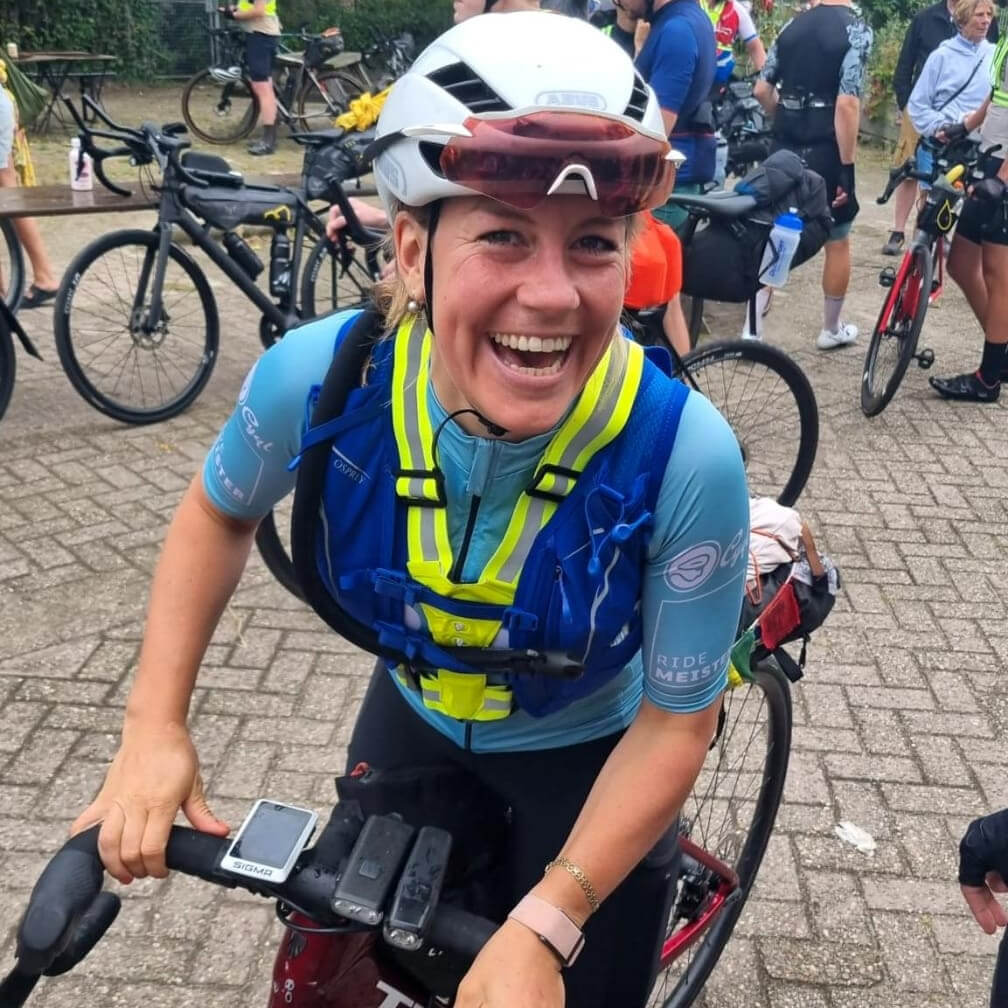
The race started on Saturday evening. The feeling reminded me of my first professional race: an unfamiliar world, not knowing what to expect, and a certain nervous excitement. Over 150 riders were ready for a multi-day cycling adventure. I noticed a wide variety of cyclists; from those in full time-trial gear to others who seemed more like leisurely bike tourists, equipped with heavy packs and enough food for two weeks. What united everyone was the goal of pushing boundaries, enduring setbacks, navigating the unexpected, and ultimately making it back to the start/finish.

The starting signal was given, and unlike the hectic sprints of professional races, the atmosphere was relaxed and friendly as we were riding along the canal toward Nieuwegein. A friend, Matthijs, whom I knew from our student ice-skating club, suddenly appeared beside me. We reminisced about our student days, talking a lot and it feels like a Saturday evening coffee ride. It was a relaxed and memorable start to the adventure ahead. As dusk fell, we switched on our bike lights and the view was surreal: a seemingly endless line of lights from the cyclists into the distance. Eventually, everyone stopped to refill water, but I decided to ride on. In hindsight, this wasn’t the smartest decision - it turned out to be the last water stop for a while.

“I would ride through the night, with no idea how it would go; but that was part of the adventure - the unknown”

Suddenly, the casual coffee ride transformed into a lonely journey through the night; the adventure had truly begun. Riding through the deserted Brabant nature reserve, De Kempen, I felt surprisingly good. With no clear plan for the night, I considered finding a hotel or a place to sleep. While pedalling, I opened Booking.com, only to realize that there weren’t many hotels around, let alone 24-hour ones! Plan B: sleeping under a tree or in a bus shelter.

The idea of continuing to ride felt more appealing than lying in the rain in a sleeping bag; and, within a few seconds then quickly thought, ‘Why not just keep going?’ The decision was made. I would ride through the night, with no idea how it would go; but that was part of the adventure - the unknown. Making the decision gave me an unexpected sense of peace.

Through the Night

The solitude of the night brought a mix of deep thoughts and moments of mental stillness. I wondered why people do this, why I was doing this, and then stopped thinking – instead, just existing in the moment. The feeling of being completely self-reliant and alone in the world gave me a strange sense of confidence.

I know, also from riding in the peloton, that drinking and eating was one of the most important things, but I had no water left and only soggy peanut butter, banana, chocolate bread - but something was better than nothing. No food and water for the next hours – it was going to be a challenge, both mentally and physically.

A new day, a magical moment

As the hours passed, I experienced something we often take for granted: the arrival of a new day. The sun rose in the east, transforming the night into morning - a magical moment that filled me with energy. I began imagining the day ahead as we approached the Huy region, an area I knew well from my racing days. The first checkpoint was in Huy, I really had to eat and drink something. My power bank and USB-C cable were not working anymore; probably because of the rain, so I also hoped to find a gas station along the way for a new cable.

The checkpoint, located across from a bakery, came just in time for me. Wet, hungry, and for the first time in 22 hours not enjoying the bike ride; I bought croissants, several chocolate rolls, two coffees and I took time to relax for a moment - it feels like a precious gift! With new energy, I climbed up the Mur de Huy. It was slow going - perhaps 8 km/h. However, I wasn’t racing anyone, and so I had the freedom to stop, to eat, and to enjoy the climb and the view at my own pace.
Day Two: Through the Ardennes

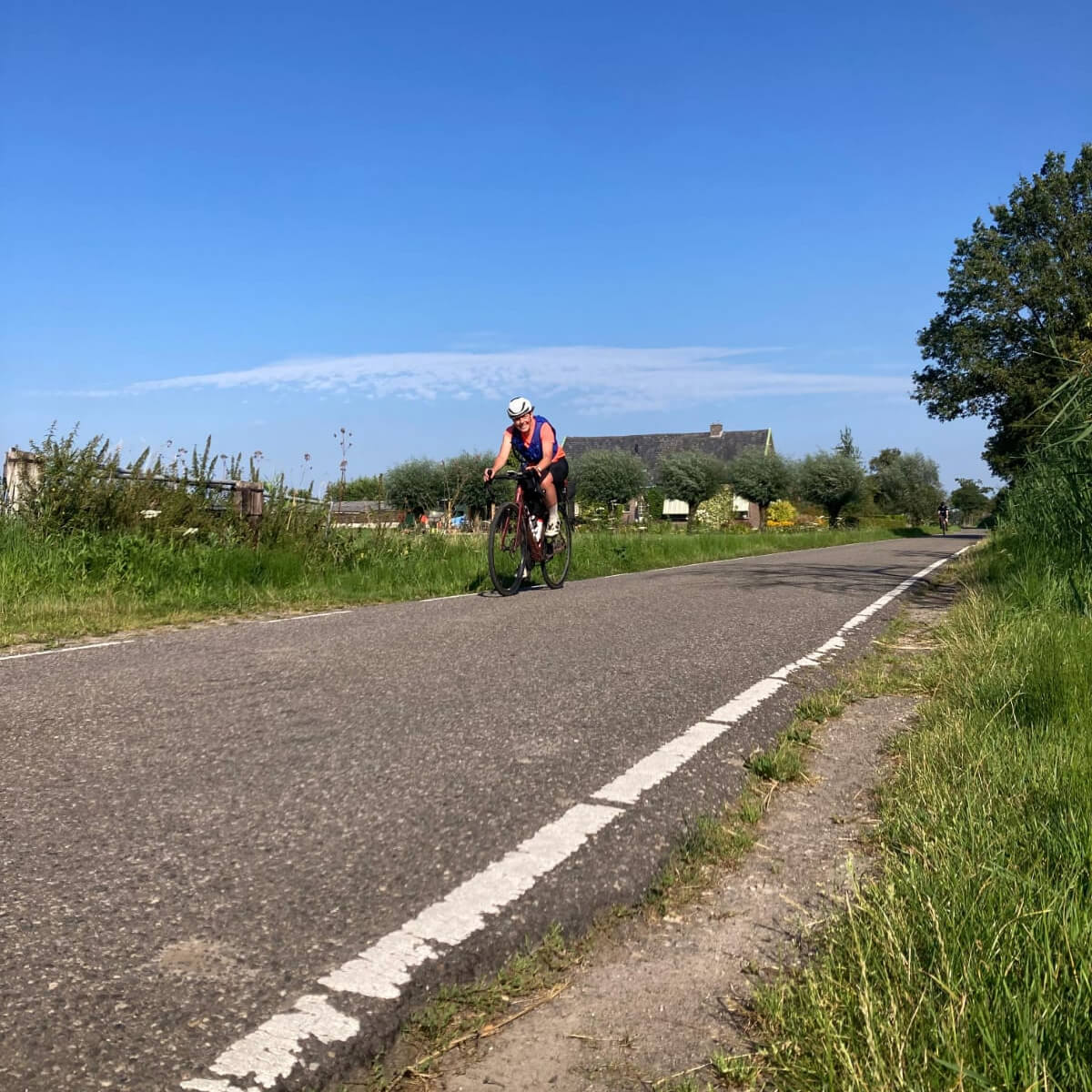
The second day unfolded before me, with a ride through the Ardennes, some stops at bakeries and an unlimited consumption of sweet chocolate rolls/ breads. Contrary to the stories I’d heard about the limits of how much sugar you can consume, I didn’t seem to have any issues with eating a lot of sugar. Nope! I enjoyed the endless chocolate rolls I could buy along the way.

Occasionally, I’d come across fellow cyclists; we’d chat briefly or for longer, or sometimes ride in companionable silence. Sometimes, we’d have surprisingly deep conversations about life, work, and what motivated us to undertake this adventure. It was a mix of autonomy, freedom, and a sense of connection with these strangers on bikes.

150 kilometres later, I reached the second checkpoint. A quick Coke, a short chat, and I was back on the road. What followed were some serious climbs that I wasn’t prepared for. Progress was slow - really slow. At times, I wondered if walking might be faster! The area was beautiful, but I couldn’t appreciate it. Negative thoughts crept in, paired with feelings of doubt and uncertainty. Should I book a hotel? Should I eat something? Or maybe I should just catch a train home.

Because of fatigue, my ability to think clearly and to make a decision turned out to be really difficult. The result - I just kept pedalling, along the roads that weave through the Belgian Ardennes. The route passed through historic villages and followed an old railway line. Out of curiosity - and perhaps as a distraction - I took the time to read about the history of the railway. It became a mental game, trying to shift my mindset, but doing so was far more challenging than I’d imagined. Eating well is relatively easy and was going fine, but maintaining a positive mindset seemed almost impossible. Despite it all, I had no real problems; no pain, no lack of food or water, no mechanical issues, and no serious setbacks. So, actually, I really had nothing to complain about.

Negative thoughts will pass

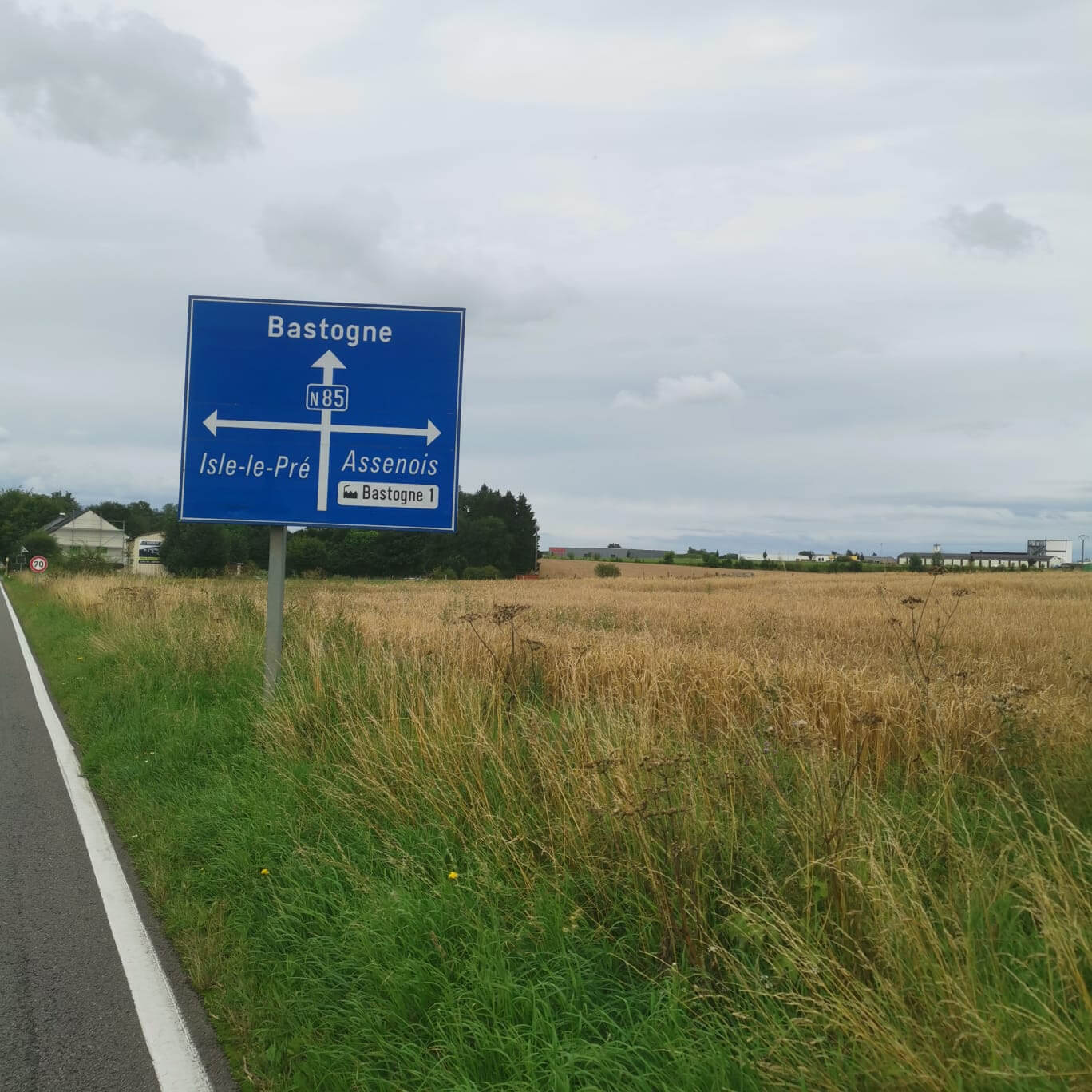
I met another cyclist, and we rode together for a bit, stopping to eat ‘dinner’ in Bastogne. It was relaxing to chat and enjoy a meal. Yet, despite my hopes that eating and resting would lift my spirits, it didn’t help much. We continued on, each going their own way; and, as with all low moments/negative thoughts, they will pass and they are (almost) always temporary - it became better, after a while.

I reached familiar terrain - Eupen, Monschau, and even road signs to Maastricht and Liège. It felt like coming home, almost euphoric. I sent a photo of the setting sun to my family group chat with the caption: “Just a casual bike ride,”. I had only mentioned that I’d be out cycling for a few days, so almost nobody knew I’d been on my bike for over 24 hours. The route passed through one of my favourite training areas, full of valuable memories - around Eupen and Baraque Michel. Descending from Baraque Michel in the twilight and darkness, heading toward Eupen, was a true experience. “What an adventure,” I thought as I rode down toward Eupen after more than 600 kilometers in the saddle.

Night Two

One of the unique aspects of an ultra-race is the limited set of choices you have to make; (continuing cycling) but among those, deciding when and where to sleep is crucial. As I descended toward Eupen, I knew I’d need to sleep soon. Should I book a hotel in Eupen or go for the ultimate adventure and sleep in my sleeping bag somewhere in the Eifel? Sleeping outside in nature would be a bonus to what was already a successful adventure. I had food and plenty of water, and so this seemed like an option.

While thinking about the options, another cyclist, Steffen, passed me. He mentioned that he was heading straight to checkpoint 3. “Is that even possible? This guy is crazy!” was my first thought. But not for the first time in this 24-hours, the extraordinary had begun to feel normal, and my sense of limits kept shifting. If he could do it, then it must be doable. With that conclusion, I had made my decision: I’d ride to checkpoint 3.

From Eupen, the route took us off-road on a 7-kilometer climb toward Monschau. We rode part of it together, and it felt comforting not to be entirely alone in the dark, deserted forest. We chatted about life, as if we were in a pub - except with sports drinks, energy bars, instead of beer and snacks. At times we rode alone, and other times together, but eventually, we arrived in Monschau. Just a few more kilometres to checkpoint 3 - a place to rest, and enjoy a glorious night’s sleep.

And then, as if the adventure wasn’t challenging enough, a cobbled climb with a gradient of about 15% lay ahead. It was so tough and absurd that it was laughable. “Who’s the crazy one that planned this?” But also, after surviving the cobble stones, we survived the climb and finally reached checkpoint 3.

Arrival at Checkpoint 3; unexpected surprise

At checkpoint 3, I got an unexpected surprise. Hoping to go into bed within minutes, there was a small, enthusiastic group of volunteers who excitedly informed me that I was the first woman to arrive. “The first woman?!” I exclaimed in disbelief. I looked around, realizing, “Oh, that’s me.”

I hadn’t been thinking about rankings or racing the entire time, but now I found myself in a winning position; I felt a mix of surprise and doubt. My plan had been to sleep through the night and enjoy the following day, but now I was supposed to race for the win? The only time I’d raced for a win was in road or mountain bike races, with a 20–30-kilometer finale ending in a sprint. This “finale,” however, would last at least a day and cover some 300 kilometres.

Still processing this unexpected development, Jason - a friend - walked out, ready to leave after two hours of sleep. We exchanged a few words, and I expressed my amazement at this strange phenomenon called ‘ultra racing’. “These people are absolutely crazy!” I laughed, fully aware that I was now one of them.

Then a ridiculous idea crossed my mind: to keep riding; but no, that wasn’t an option. I had to sleep. A rare moment of clear thinking allowed me to make a choice. Rationally, I knew I was tired, and that my ability to process and react in traffic was diminished, and that pushing on would be irresponsible. The compromise - sleep for a few hours, wake up at 5 a.m., and then see how I felt. Winning would be nice, but it wasn’t the main goal. With that plan in mind, I cleaned my bike, ate, showered, and finally got some rest.

The 350 Kilometre Final

Not long after, I was back on the bike, feeling remarkably good - and, to my surprise, excited to ride "just a bit more." A strange realization, given that I’d already cycled almost 700 kilometers, with only 3.5 hours of sleep. This time, I had a plan, and one that felt more like a race strategy than a bikepacking adventure. First, I’d climb through the Limburg hills, then follow the route northward through Venlo and Nijmegen toward Utrecht. The approach: eat well, limit breaks, maintain a steady pace, and stay in a low aerobic zone.

“It was Monday morning, and I stood in line alongside men in suits and women in business outfits heading to work. Nobody said a word, but I could feel their curiosity about what I was doing”

The start of the second day, giving me an indescribable sense of strength and presence. In the next village, I bought ten chocolate rolls, two coffees, and half a baguette - enough fuel for the next five hours. It was Monday morning, and I stood in line alongside men in suits and women in business outfits heading to work. Nobody said a word, but I could feel their curiosity about what I was doing. It was a big contrast between two worlds: the adventure of the unknown on the bike and the “rat race” of modern society.

I felt good but was now in a different mindset - I wanted to win. But, how do you “win” an ultra-race? Where were my competitors? Now instead of road racing there was no communication with my team director or teammates for updates. Via WhatsApp, A friend helped track my competitors using DotWatcher. The plan was simple: keep riding, eat, drink, and enjoy. Everything went smoothly, though I rode faster than the day before and became acutely aware of every minute I wasn’t moving. Until Nijmegen everything went according to plan, strangely enough I could enjoy the ride through the unknown part of the Netherlands.

The Last 100 Kilometers Felt Eternal

The signs for Nijmegen appeared - wow, I was really close. However, my body disagreed. I had run out of food, water and energy. How could this be? I had expected the final 100 kilometers to fly by - instead, it was the opposite.

“Just keep pedalling”. Negative moments are temporary, I was saying to myself. I thought about my old team’s slogan, Pushing Dreams. At this moment: winning this ultra was my dream. And then the famous quote from a women’s peloton sprinter: The show must go on. So, I put on some music: “The Qmusic foute playlist” and De Snollebollekes, and set a small sub-goal: I’d ride to De Proloog in Amerongen (a well-known cycling café) and reward myself with cake.

The goal worked, but when I arrived, I faced my biggest setback of the race. It was Monday, and De Proloog was closed. No cake, no coffee, no water. The final 50 kilometres felt longer than the 950 I’d already completed. The climb up the Ruiterberg felt harder than the Mur de Huy. The route passed through Driebergen, practically past my own house. The temptation to stop, fill my bottles and rest was overwhelming - but I didn’t, it was no option. Somewhere under an apple tree, a massive crate of apples caught my eye. I couldn’t resist and grabbed one. Immediately, I heard yelling - two angry farmers shouting at me to leave the apples alone. Understandable, but I was too hungry to process it. I apologized, “Sorry, I’m hungry”, and put the apple away and rode on.

The next disappointment came just five kilometres from the finish. As I crossed Laagraven during rush hour, I was hit by a car. My wheel was bent, and my disc brake was damaged. I yelled in frustration and cursed the municipality for this dangerous crossing, and I somehow kept going. With a wobbly wheel and bent brake, I pushed through the final three kilometers along the canal to the finish.

Suddenly, the moment I had longed for was there. I got off the bike, a few photos were made, and shared a quick race report. Then, I joined the post-race gathering. The suffering and emotional instability of the past hours disappeared as I chatted casually about work, cycling, and bits of the journey. It felt like a regular Tuesday evening hangout, and for a moment, I forgot that I had spent nearly 50 hours on a bike!

An Ultra Race: A Reflection

Since childhood, I’ve loved cycling - the adventure, the freedom it brings. During and after my university years, I raced professionally in a team and ‘cycling became work’. In recent years, my work has focused on the societal benefits of cycling: making the world healthier and more sustainable through the bike. The bike in relation to sustainability and health

An ultra race opened up a new world for me. Cycling isn’t just a tool for a healthier, more sustainable society; it also connects to fundamental values and challenges. The bike, and ultra racing, represents ultimate freedom and autonomy. In a complex world where we often rely on convenience, it’s powerful to experience being entirely self-reliant.

Ultra racing pushes you beyond limits, helps you understand yourself better, and takes you far outside your comfort zone. It’s a way to slow down and simplify in a busy, uncertain world that never stops. It brings you back to the basics: eat, drink, and move forward. It’s about living in the moment, and appreciating your surroundings, and finding joy in small things as you realize what is really important in life. We seem to need more and more to feel happy, and yet during an ultra-race, even simple things - like a sunrise, a cup of coffee, or a glass of cold water - bring immense gratitude and joy; and, learning and dealing with negative moments are also extremely valuable.

It’s not all beauty, in life and during an ultrarace. The difficult moments must be experienced and embraced too. Realizing that negative feelings are temporary and (often) pass helps build resilience. With the right mindset, almost anything is manageable. It forces you to be resourceful and creative, relying entirely on yourself.

Who Are Ultra Racers, and What’s the Atmosphere Like?

Returning to my initial question: why an ultra-race? The answer is unique for everyone, but upon reflection, common themes emerge: pushing boundaries, stepping out of your comfort zone, seeking adventure, and finding simplicity and peace in a hectic life. For many, it’s also about trusting your body and mind and realizing you’re capable of more than you thought.

Physical fitness matters, of course. A good aerobic base, cycling experience, and good material all help. But I suspect the mental game plays an even larger role: handling negative thoughts and setbacks - a skill valuable not just in racing but in life.

“There’s a sense of ultimate freedom paired with a feeling of connection to the other ‘unknown’ racers. Despite the individual nature of the effort, it feels like a collective adventure”

The atmosphere in ultra races is unique. The challenging situations create deep bonds between participants. As I described earlier, there’s a sense of ultimate freedom paired with a feeling of connection to the other ‘unknown’ racers. Despite the individual nature of the effort, it feels like a collective adventure - a team of individuals tackling an enormous distance together. With proper preparation and smart/safe decisions during the race, ultra racing can be safe and fulfilling. Stepping away from the rat race and the turbulent, challenging world we live in, simply riding a bike from point A to point B, could bring happiness to many and contribute to the joy of cycling and many life lessons.

In the end, 1,000 kilometers later, I gained a wealth of life lessons - and a truly remarkable adventure with amazing people.

Thanks to the organization and all other cyclists along the way, for this beautiful adventure.

And, TREK bikes, ABUS, Born, Cyclon, BBB, and Lake Cycling for the support and provision of great equipment to help me to achieve this epic event.

About the author

Belle de Gast is a former professional cyclist who competed for the Parkhotel Valkenburg team. After retiring from professional cycling, Belle transitioned into a career as a physiotherapist and in June 2023, she was appointed as the Bicycle Mayor of Utrecht, dedicating herself to promoting cycling within the community. Belle is passionate about leveraging her experience to inspire others to embrace cycling for both health and enjoyment.

Find Belle on LinkedIn and Instagram, or read more about her work on her website.